“Musical Development Matters” isn’t just a nice phrase. It is the title of a real guide for early years music in England, and its message is simple: musicality is part of being human, and every child is born ready to learn. Here is what it says, what the official early years curriculum expects, and how a StoryBox class fits in.
In a nutshell
- Musical Development Matters in the Early Years (2018) is free guidance that describes how music grows in four ways: hearing and listening, vocalising and singing, moving and dancing, and exploring and playing.
- Music is part of England’s statutory early years curriculum. By the end of Reception, children are expected to sing well-known nursery rhymes and songs and to try to move in time with music.
- The government’s National Plan for Music Education says early years settings “should start from the premise that all children are musicians”.
- Children’s brains grow faster in the first years of life than at any other time, so these early musical experiences land on fertile ground.
What is Musical Development Matters?
Musical Development Matters in the Early Years was written by Nicola Burke and published in 2018 by Early Education (the British Association for Early Childhood Education). It grew out of Tri-Music Together, a project funded by the charity Youth Music, and is free to download.1
It opens with two ideas we love: that “musicality is an intrinsic part of being human”, and that “music should be seen as a core component of children’s learning”.2 It is written for practitioners, teachers and parents, to help us all notice the musical things young children are already doing.
The four ways music grows
The guide describes children’s musical development in four overlapping strands, each with examples from birth to five and ideas for adults.2
1. Hearing and listening
From the very start, a baby “turns head towards sounds”, in the guide’s words. Adults can help by using “musical interactions such as infant directed speech and songs to tune in to babies”. In class, this is the live cello or violin, the classical music that matches each part of the story, and the quiet moment of the lullaby.
2. Vocalising and singing
One of our favourite statements is that a baby “imitates the melodic shape … of a caregiver’s voice”. In other words, even tiny babies copy the ups and downs of your voice. That is early singing. In class: our welcome song, the original songs written for every story, and the nursery rhyme the grown-ups sing to their little ones.
3. Moving and dancing
Between about 8 and 20 months, the guide says, a child “moves whilst listening to music and can often feel and move to the pulse”. In class, that is creeping, galloping, bouncing and swishing ribbons in time with the music.
4. Exploring and playing
Babies in their first year may shake instruments “with one hand and in both hands simultaneously”, and by two to three years children start to create their own patterns in music. In class, this is the shakers, bells and drums, plus props and sensory play that turn the story into something to touch.
The guide is clear that its statements “should not be used as checklists”. Every child develops in their own way and at their own pace.2
Music in the early years curriculum
In England, the Early Years Foundation Stage (EYFS) is the statutory framework for children from birth to five. The current version came into effect on 1 September 2026; the 2026 changes were about welfare and safeguarding, and the early learning goals stayed the same.3
Music sits in Expressive Arts and Design. The early learning goal “Being Imaginative and Expressive” says that, by the end of Reception, children at the expected level will:
- “Invent, adapt and recount narratives and stories with peers and their teacher.”
- “Sing a range of well-known nursery rhymes and songs.”
- “Perform songs, rhymes, poems and stories with others, and – when appropriate – try to move in time with music.”3
The framework also says that “the quality and variety of what children see, hear and participate in is crucial” for their understanding, self-expression, vocabulary and communication, and that “the frequency, repetition and depth of their experiences are fundamental to their progress”.3 Rhymes also appear in Communication and Language, and rhymes, poems and songs in Literacy, where the framework notes that language comprehension “starts from birth”.
The government’s non-statutory guidance, Development Matters, adds practical ideas for babies and toddlers: “Babies love singing and music”, “Move with babies to music”, and “Allow babies time to anticipate words and actions in favourite songs.” It also gives one piece of advice we think is spot on: “do not have music playing all the time”. Shared, live, back-and-forth music is what counts, not background noise.4
“All children are musicians”
The National Plan for Music Education (2022) says that “early years settings and schools should start from the premise that all children are musicians”, and calls a strong early years foundation in music vital for all children.5 Ofsted’s research review of music agrees that “young children can encounter the joy of music through singing and playing in the early years”, and that this play builds familiarity with musical ideas long before children learn to read music.6
Later on, music in schools has a mixed story. A-level Music entries hit a record low in 2026: 5,106 across England, Wales and Northern Ireland, down 39% since 2014.7 GCSE Music entries rose in 2024 and 2025, but remain well below 2010 levels.8 All the more reason to make music a normal, joyful part of life from the very beginning.
Why now?
Harvard’s Center on the Developing Child estimates that “more than 1 million new neural connections are formed every second in the first few years of life”, and that “our early experiences shape our brain architecture”.9 Brain scans show that a baby’s brain roughly doubles in volume in the first year, and by age two it is about 83% of adult size.10
You may see the claim that “90% of brain development happens by age five”. That’s a mix-up: by about five, the brain has reached around 90% of its adult size, but learning and brain development carry on for many years.11 The point stands, though: the early years are a time of extraordinary growth, and the everyday back-and-forth of singing, talking and playing together is part of what shapes it.
How StoryBox fits in
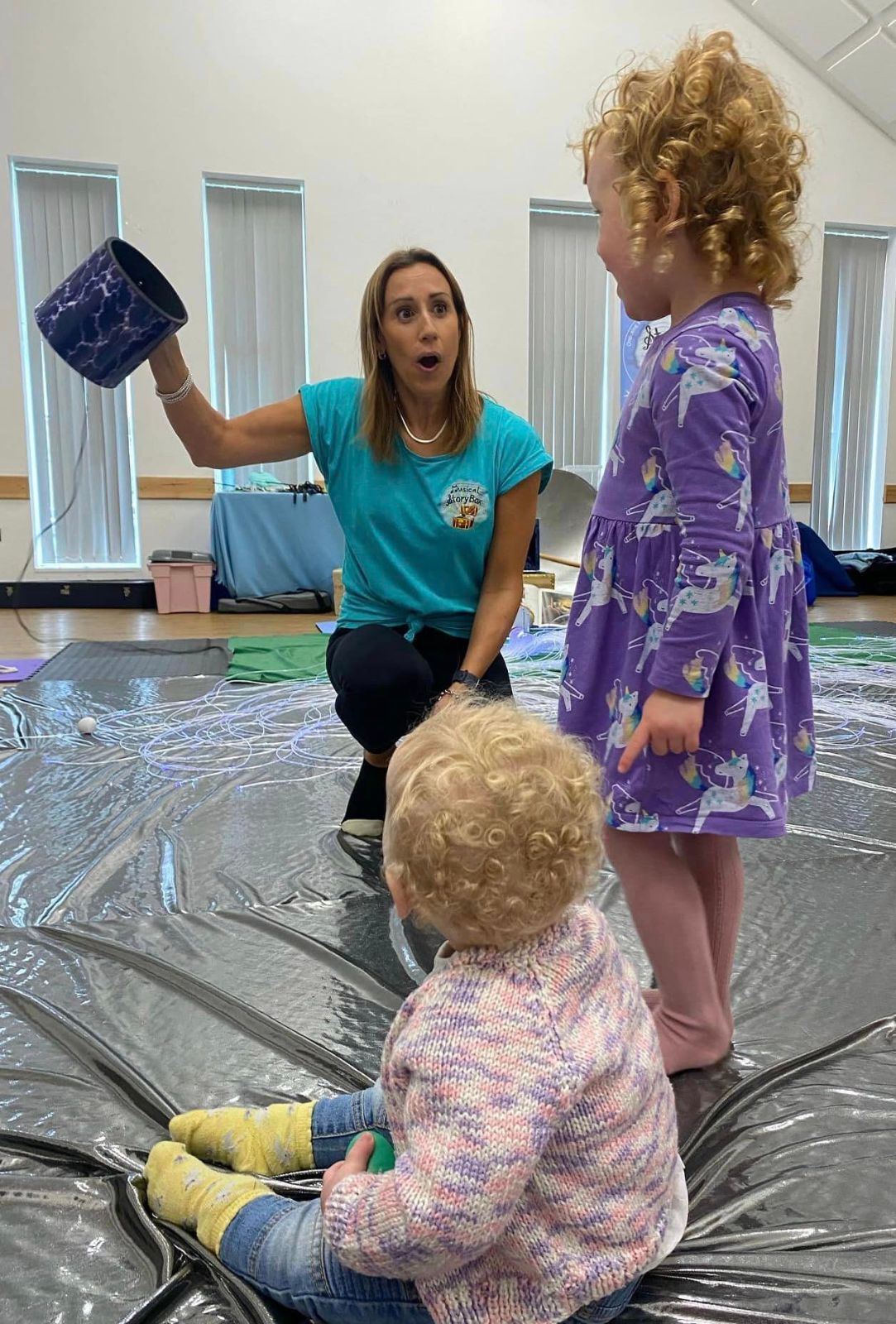
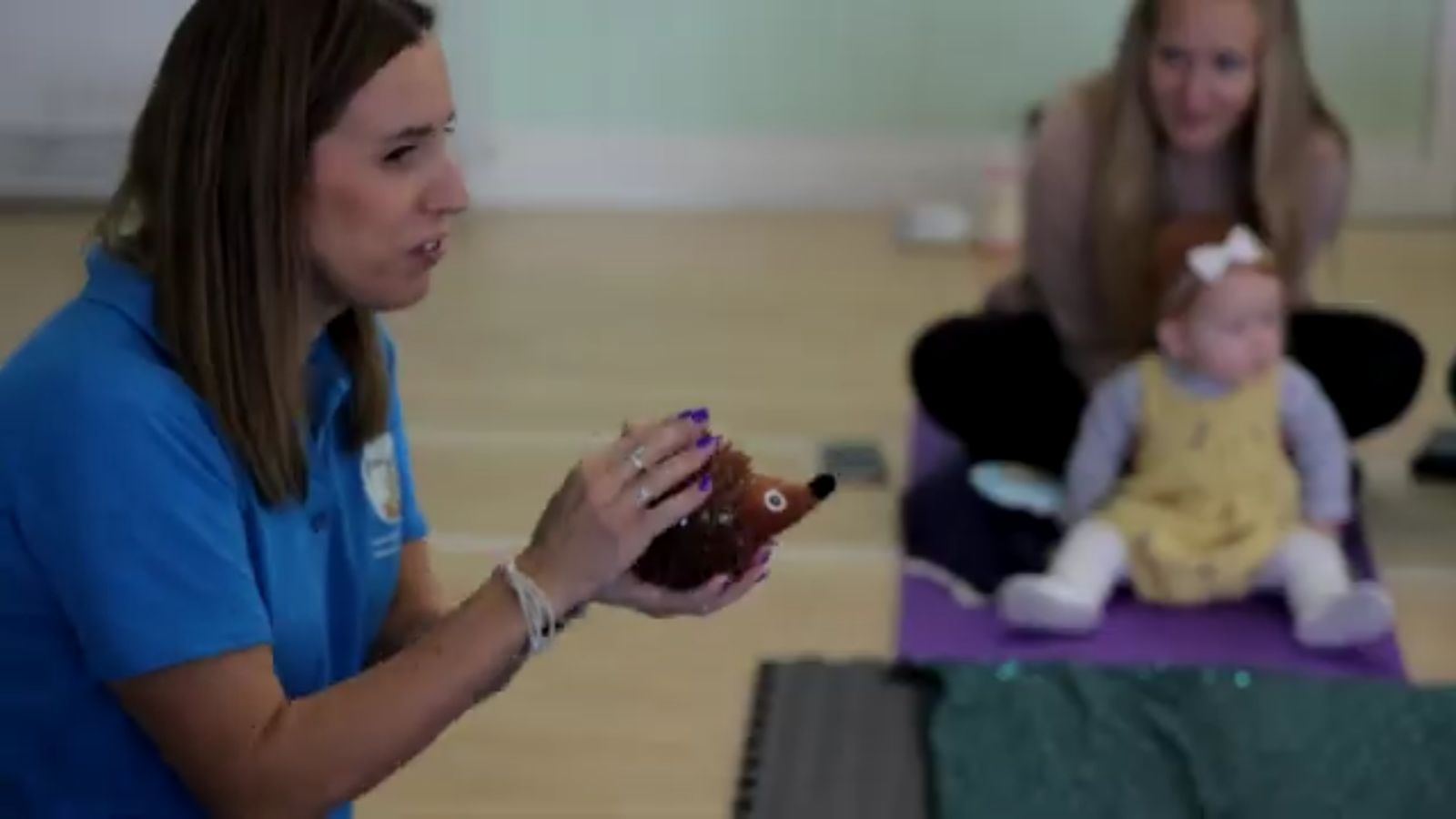
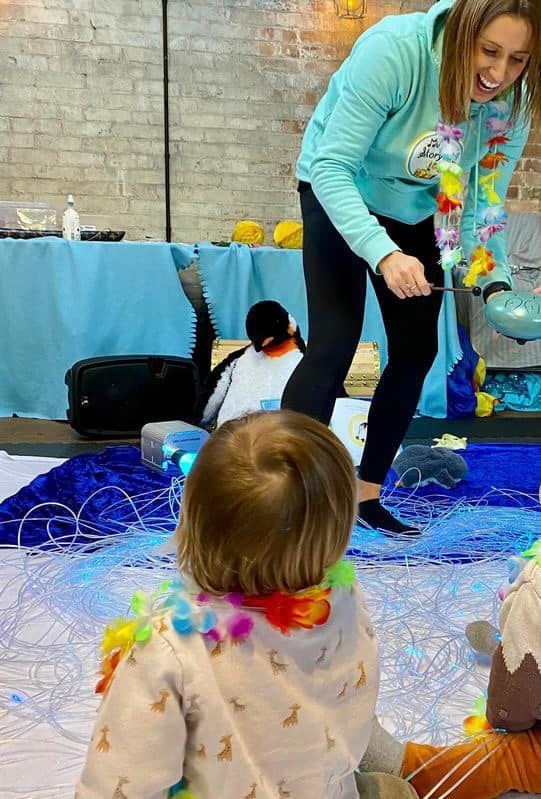
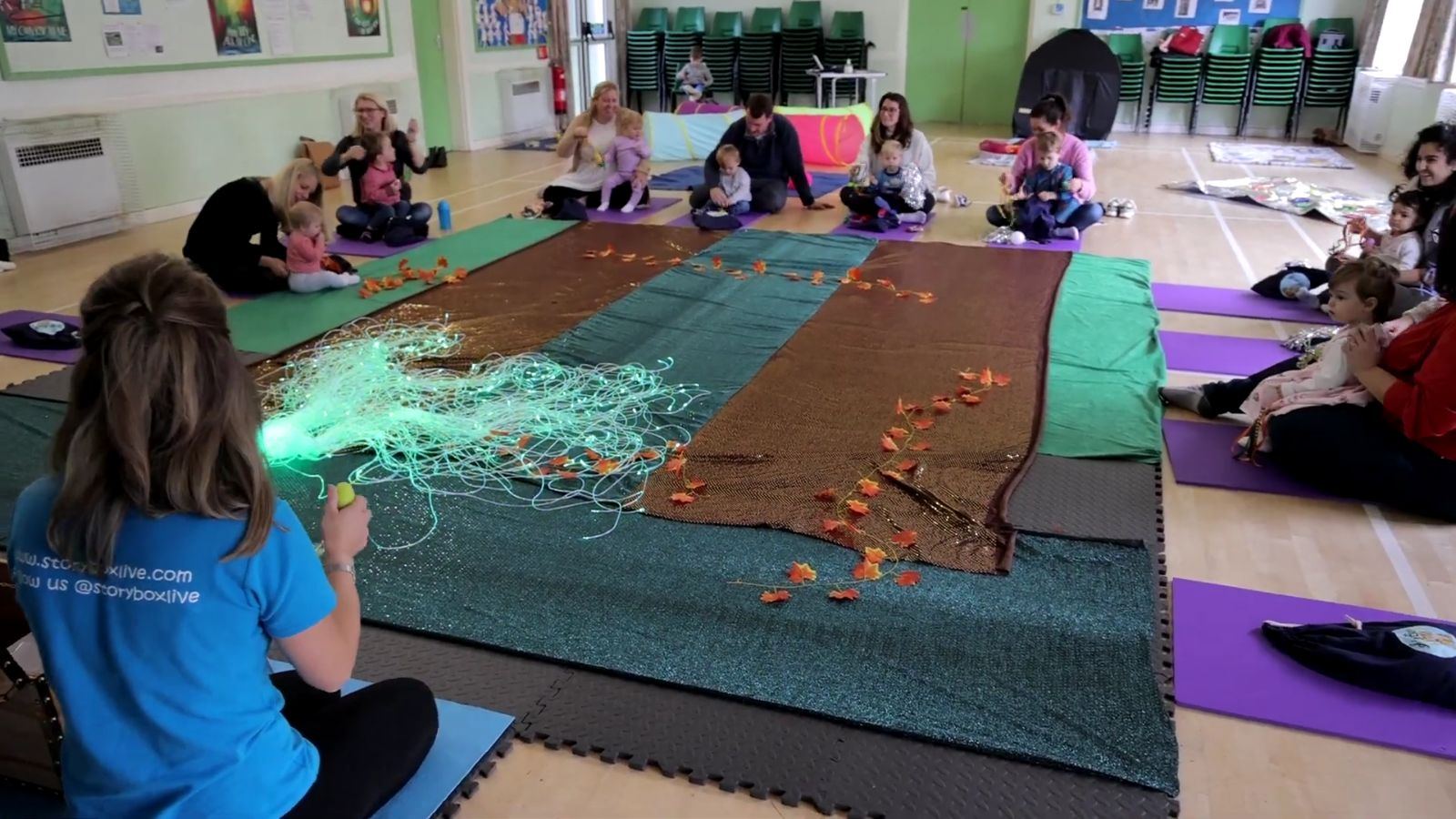
Our classes are designed with the EYFS in mind, and every class touches all four strands of Musical Development Matters: listening to live and recorded music, singing familiar and new songs, moving to the pulse, and exploring instruments and props. We don’t test or tick off children. As the guidance says, they are “born ready, able and eager to learn”, and our job is to give them rich, joyful experiences to learn from.
Try it at home
Pick one strand a day. Listen for sounds on a walk (hearing and listening). Sing while you change a nappy (vocalising and singing). Bounce to a song on the radio (moving and dancing). Fill a bottle with rice and shake it (exploring and playing).
Schools and nurseries: our sessions and StoryBox EDU resources are built around the same principles. Find out more about our school and nursery sessions.
References
Sources checked October 2026.
- Youth Music. Musical Development Matters in the Early Years (resource page and free download). youthmusic.org.uk
- Burke N (2018). Musical Development Matters in the Early Years. Watford: The British Association for Early Childhood Education (Early Education). ISBN 0-904187-79-9. Download via Youth Music
- Department for Education (2026). Early years foundation stage (EYFS) statutory framework for group and school-based providers, effective 1 September 2026. gov.uk
- Department for Education (2021, updated 2023). Development Matters: non-statutory curriculum guidance for the early years foundation stage. gov.uk
- Department for Education and Department for Digital, Culture, Media and Sport (2022). The power of music to change lives: a National Plan for Music Education. gov.uk
- Ofsted (2021). Research review series: music. gov.uk
- UK Music (13 August 2026), using JCQ results data. ukmusic.org; and Campaign for the Arts (20 August 2026). Exam results 2026. campaignforthearts.org
- Classic FM (21 August 2025). GCSE music entries rise for two consecutive years. classicfm.com
- Center on the Developing Child at Harvard University. Brain architecture. developingchild.harvard.edu
- Knickmeyer RC, Gouttard S, Kang C, et al. (2008). A structural MRI study of human brain development from birth to 2 years. Journal of Neuroscience, 28(47), 12176–12182. doi.org/10.1523/JNEUROSCI.3479-08.2008
- University of Washington Institute for Learning & Brain Sciences (I-LABS). The first 2,000 days matter. ilabs.uw.edu