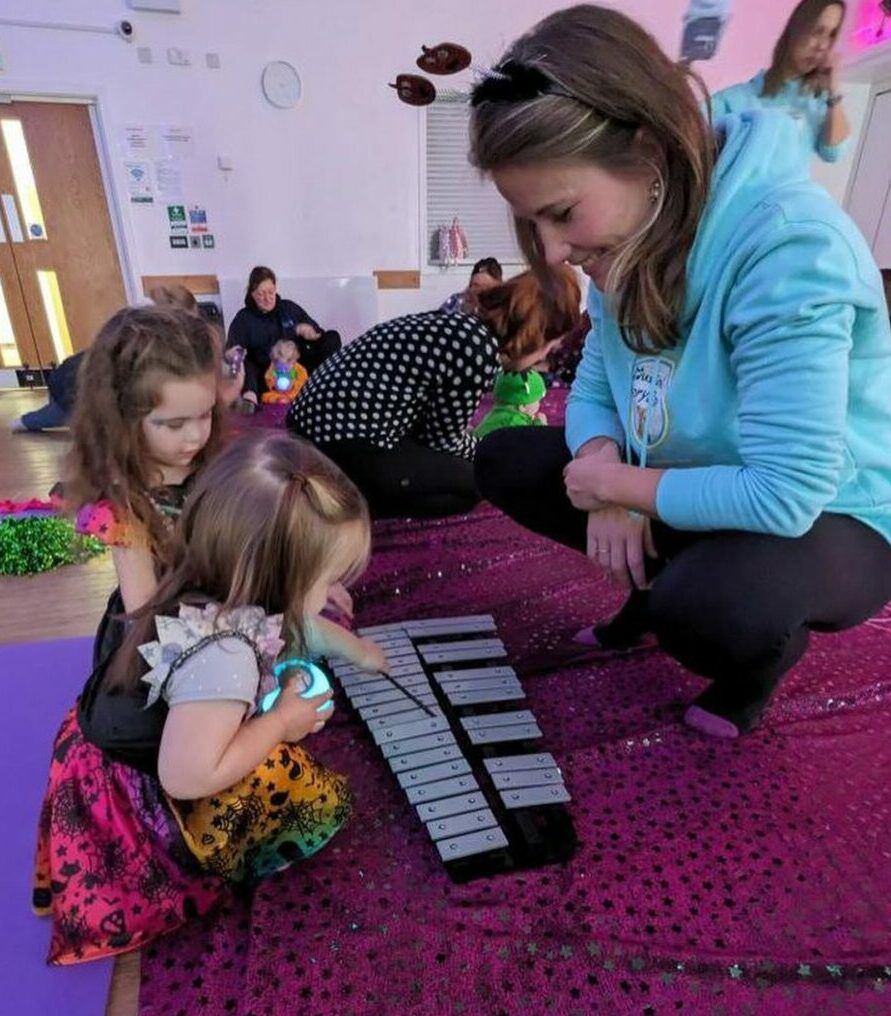
“Wait for it… wait for it… now!” If you have ever watched a room of toddlers holding their shakers still until the music starts, you have seen self-control being practised. Here is what research says about rhythm, moving together, stop-and-go games and the skills we often call “discipline”.
In a nutshell
- From around 5 months, babies move more rhythmically to music than to speech, and the ones who move more in time smile more.
- Moving in time with someone makes little ones more helpful to that person. In one study, 14-month-olds were about twice as likely to help without being asked.
- Stop-and-go music games give 3 to 5-year-olds fun practice at stopping, listening and waiting. Trials and reviews show small improvements in self-control, so the evidence is promising rather than proven.
- Music won’t make children obedient or raise IQ. It does give them hundreds of joyful chances to practise the skills that self-discipline is built on.
What we mean by “discipline”
When parents talk about discipline, they usually mean a child who can listen, wait, take turns, stop when asked and cope when one activity ends and another begins. Psychologists call these skills self-regulation. One of the most important is inhibitory control: the ability to stop yourself doing something you want to do, like shaking a shaker, until the right moment.
These skills aren’t switched on by rules. They grow with practice, and they grow a lot between about three and five. Music is full of natural practice: you have to listen for the start, keep going with everyone else, and stop when the music stops.
Babies are drawn to the beat
In a study of 120 babies aged 5 months to 2 years, researchers played music, steady drumbeats and speech while filming and motion-capturing the babies’ movements. The babies moved rhythmically more to music and beats than to speech, and the better their movements fitted the music, the more they smiled.1
That doesn’t mean babies can keep a beat like an adult. Toddlers start trying to slow down to match a partner’s beat around their second birthday, and staying in time with a slow beat is more of a two-and-a-half to three-year-old skill.2 Interestingly, a real person helps: children aged 2½ to 4½ drummed more accurately with a human drumming partner than with a drum machine or a speaker. Only with a real person did the youngest manage to match a beat outside their own natural speed.3
Moving together, getting along
Something special happens when we move in time with someone. In a Canadian study, 14-month-olds were bounced gently to music while facing a researcher who bounced either in time with them or out of time. Afterwards, when the researcher “accidentally” dropped things, babies who had bounced in sync helped her without being asked 25.8% of the time, against 13.1% for the out-of-sync group.4 Follow-up studies found the extra helpfulness went to the person they had moved with, and even to that person’s friends.5 Moving together seemed to be the key ingredient, with music helping babies stay content and engaged while they did it.6
Older children show the same pattern. Pairs of 4-year-olds who walked round a “pond” singing, dancing and playing instruments together were afterwards more likely to help and cooperate with each other than pairs who played the same game without music. They also talked to each other almost twice as much while working together on a marble game (6.38 against 3.38 remarks per round).7 Even two and a half minutes of swinging in time together helped pairs of 4-year-olds cooperate more smoothly straight afterwards.8
These are short-term lab effects. Nobody has shown that a music class makes children permanently kinder. But they show how naturally moving and making music together pulls little people towards each other.
Stop! The science of freeze games
Stop-and-go games are some of the oldest music games there are, and researchers have built whole programmes around them. Red Light, Purple Light is a circle-time programme for 3 to 5-year-olds with games such as the Freeze Game, Drum Beats and Conducting an Orchestra, and each session starts and ends with a transition song.9 Across several trials the results are small and mixed: in one randomised trial in 14 Head Start classrooms, children made small gains on direct tests of self-control, such as a “do the opposite” game (touch your toes when asked to touch your head).10 In two trials, extra analyses suggested the biggest gains were for children who found self-control hardest to begin with.9
Rhythm games look especially promising. In a German study with blinded testers, 5 and 6-year-olds who did 20 weeks of short rhythm sessions improved more on a “stay still like a statue” self-control test than children who did a sports programme.11 And in an Australian trial with 213 children in eight preschools in disadvantaged communities, eight weeks of rhythm-and-movement games led by ordinary preschool teachers improved children’s self-regulation, with benefits still seen six months later after they had started school.12
How strong is the evidence?
Honestly: promising, not proven. Two recent reviews pooling studies of music training for children found small improvements in executive skills, with the clearest effect on inhibitory control (stopping yourself). One looked at group music for 3 to 6-year-olds; the other pooled 46 studies of children aged 3 to 12, including individual lessons.13,14 But many of the studies are small and not well randomised, and a large, sceptical review of music training and children’s wider thinking and school skills found the effect shrinks to about zero in the best-designed studies.15
Our reading of it: music games are a fun, natural way for preschoolers to practise self-control, and there is reasonable evidence for small short-term benefits. Claims that music makes children “smarter” or “better behaved” in general go beyond the evidence.
What about babies?
Self-control trials start at about age three. For babies, the story is about comfort, predictability and sharing attention. In a small Canadian study, babies who sang, moved and played percussion with a parent in weekly classes from 6 months used more early communicative gestures like waving and pointing by their first birthday, smiled more and were easier to soothe, according to their parents, compared with babies in a class where classical CDs played in the background.16 Several of those results were reported by parents who knew which class they were in, so they need confirming in bigger studies.
Routines matter too. Starting and ending every class with the same songs gives children a predictable signal of what is coming next. Music therapists use hello and goodbye songs this way, though they haven’t been tested on their own in research.17 In a large US study of about 8,500 preschoolers, children whose families sang with them at least three times a week had 1.5 times the odds of strong social-emotional health. That’s a link, not proof that singing caused it.18
What the science doesn’t say
- “Babies can keep the beat.” Babies love to move to music; keeping time comes later, with the first signs at around two and a half, mostly when drumming with a real person.
- “Music classes make children obedient.” Self-regulation isn’t obedience. It is a child’s own growing ability to manage their attention, feelings and actions.
- “Crossing the midline connects the two halves of the brain.” Reaching across the body is a normal part of how little ones move, but the brain-wiring claim comes from Brain Gym-style programmes and isn’t supported by good evidence.19
How this shapes a StoryBox class
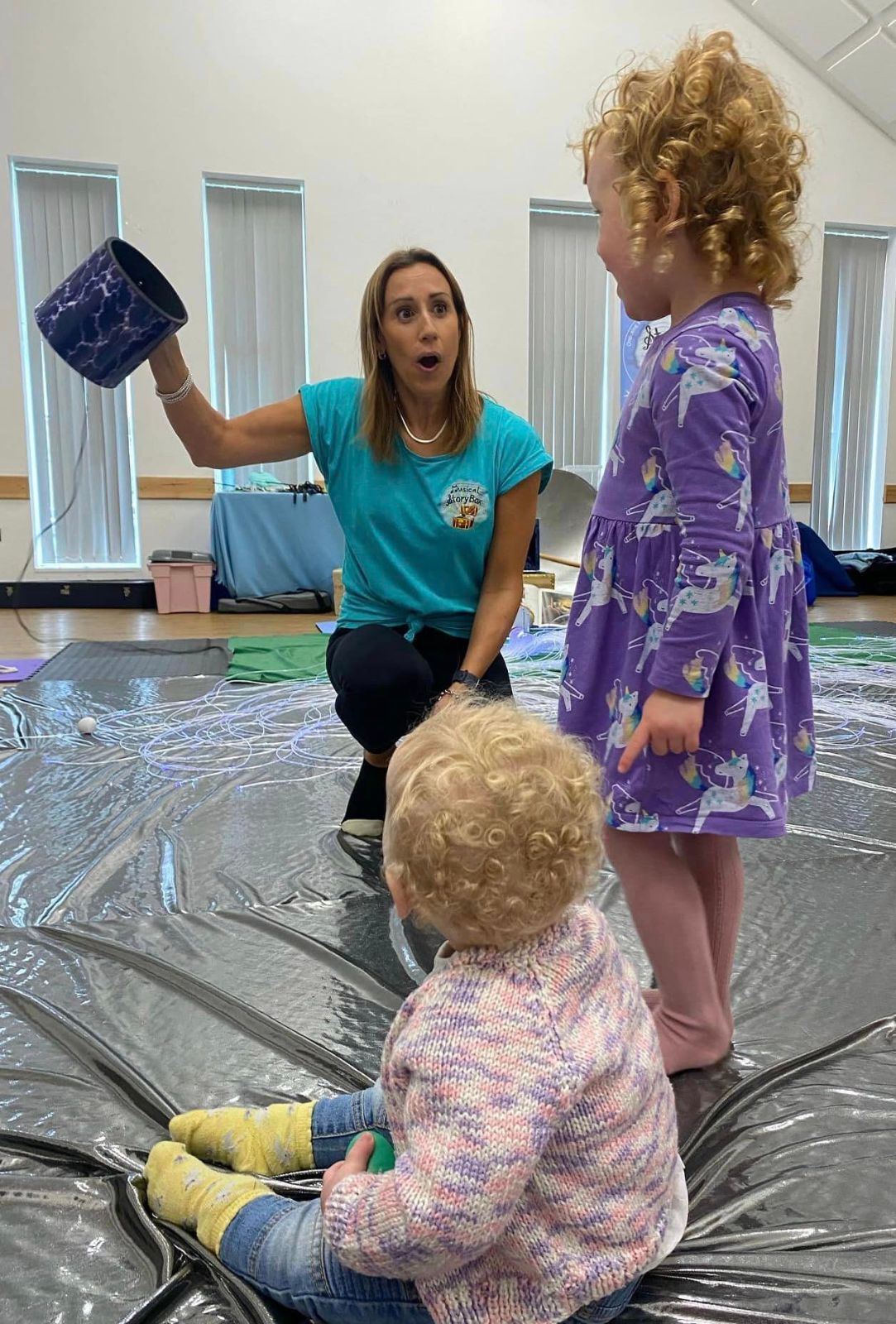
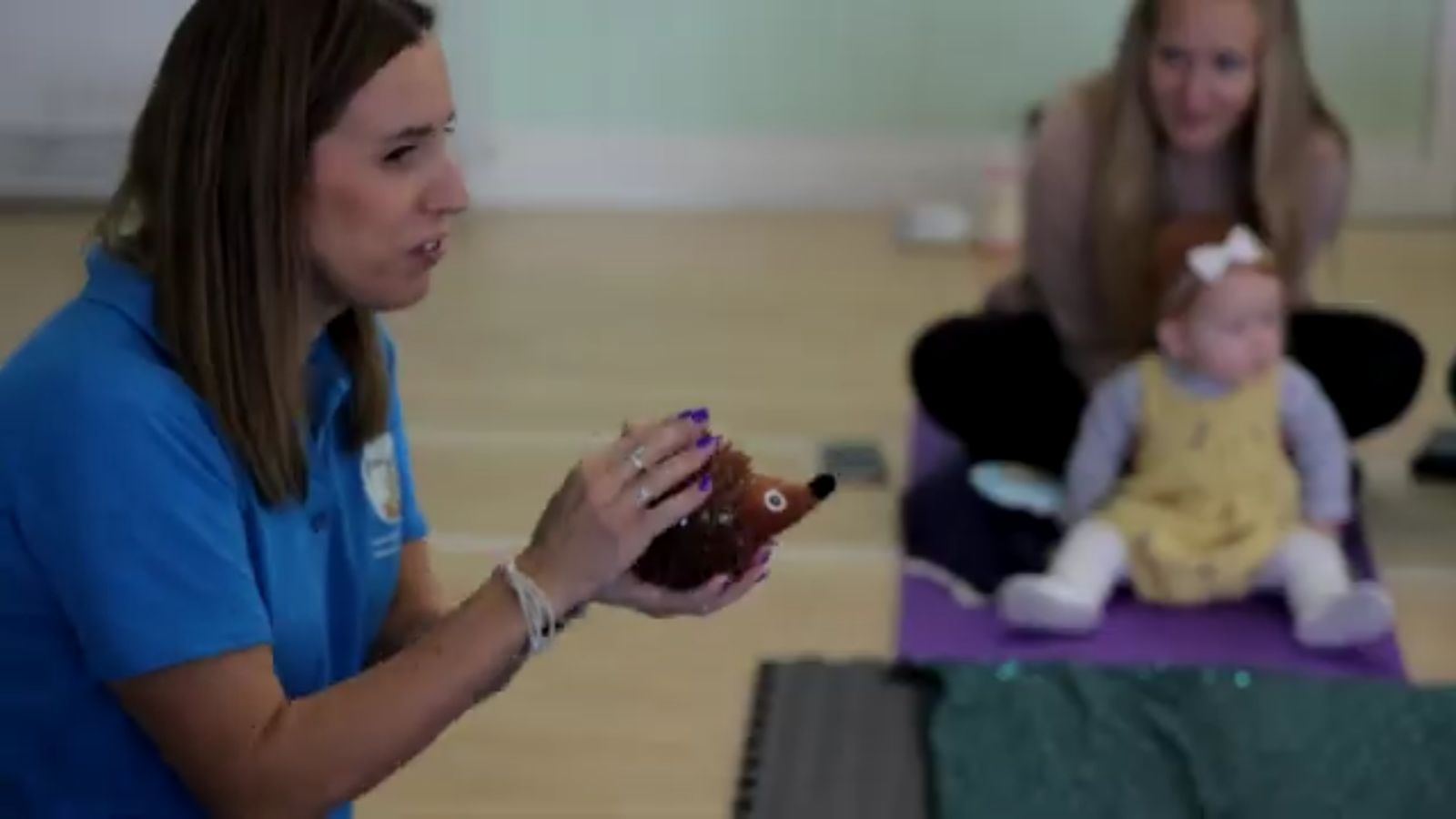
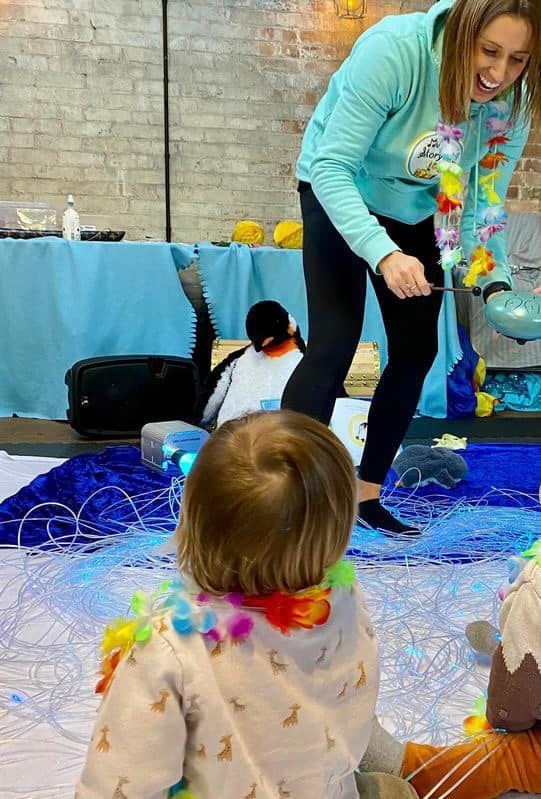
We play loud and quiet, fast and slow, go and stop. We wait for the music before we shake, march and gallop together, and pass instruments and props around the circle. For babies, it is the comfort of the same welcome song every week and being bounced in time on a grown-up’s knee. For toddlers and preschoolers, it is the delicious tension of “wait for it… now!”
Try it at home
Freeze dance: dance to a song, pause it, and everyone freezes. Older children can take turns being in charge of the pause button.
Fast and slow: walk like an elephant to slow music and tiptoe like a mouse to fast music.
Knee bounces: for babies, bounce them gently on your knee in time with a song. Moving together in time is the key ingredient.
References
Sources checked October 2026. Where a study was small or early, we say so in the text.
- Zentner M, Eerola T (2010). Rhythmic engagement with music in infancy. PNAS, 107(13), 5768–5773. doi.org/10.1073/pnas.1000121107
- Yu L, Todoriki K, Myowa M (2022). From spontaneous rhythmic engagement to joint drumming: a gradual development of flexible coordination at approximately 24 months of age. Frontiers in Psychology, 13, 907834. doi.org/10.3389/fpsyg.2022.907834
- Kirschner S, Tomasello M (2009). Joint drumming: social context facilitates synchronization in preschool children. Journal of Experimental Child Psychology, 102(3), 299–314. doi.org/10.1016/j.jecp.2008.07.005
- Cirelli LK, Einarson KM, Trainor LJ (2014). Interpersonal synchrony increases prosocial behavior in infants. Developmental Science, 17(6), 1003–1011. doi.org/10.1111/desc.1219348 babies. Overall helping (50.6% vs 34.0%) was only a trend; the difference in helping without being asked was significant.
- Trainor LJ, Cirelli L (2015). Rhythm and interpersonal synchrony in early social development. Annals of the New York Academy of Sciences, 1337, 45–52. doi.org/10.1111/nyas.12649
- Cirelli LK, Wan SJ, Spinelli C, Trainor LJ (2017). Effects of interpersonal movement synchrony on infant helping behaviors: is music necessary? Music Perception, 34(3), 319–326. doi.org/10.1525/mp.2017.34.3.319
- Kirschner S, Tomasello M (2010). Joint music making promotes prosocial behavior in 4-year-old children. Evolution and Human Behavior, 31(5), 354–364. doi.org/10.1016/j.evolhumbehav.2010.04.004
- Rabinowitch T-C, Meltzoff AN (2017). Synchronized movement experience enhances peer cooperation in preschool children. Journal of Experimental Child Psychology, 160, 21–32. doi.org/10.1016/j.jecp.2017.03.001
- Blueprints for Healthy Youth Development. Red Light, Purple Light: a self-regulation intervention (programme summary and trials). blueprintsprograms.org; and Tominey SL, McClelland MM (2011). Red light, purple light: findings from a randomized trial using circle time games to improve behavioral self-regulation in preschool. Early Education and Development, 22(3), 489–519. doi.org/10.1080/10409289.2011.574258; and McClelland MM, Tominey SL, Schmitt SA, et al. (2019). Red Light, Purple Light! Results of an intervention to promote school readiness for children from low-income backgrounds. Frontiers in Psychology, 10, 2365. doi.org/10.3389/fpsyg.2019.02365The finding about children who started lowest came from exploratory analyses in these two trials.
- Schmitt SA, McClelland MM, Tominey SL, Acock AC (2015). Strengthening school readiness for Head Start children: evaluation of a self-regulation intervention. Early Childhood Research Quarterly, 30, 20–31. doi.org/10.1016/j.ecresq.2014.08.001
- Frischen U, Schwarzer G, Degé F (2019). Comparing the effects of rhythm-based music training and pitch-based music training on executive functions in preschoolers. Frontiers in Integrative Neuroscience, 13, 41. doi.org/10.3389/fnint.2019.00041
- Bentley LA, Eager R, Savage S, Nielson C, White SLJ, Williams KE (2023). A translational application of music for preschool cognitive development: RCT evidence for improved executive function, self-regulation, and school readiness. Developmental Science, 26(5), e13358. doi.org/10.1111/desc.13358
- Lu Y, Shi L, Musib AF (2024). Effects of music training on executive functions in preschool children aged 3–6 years: systematic review and meta-analysis. Frontiers in Psychology, 15, 1522962. doi.org/10.3389/fpsyg.2024.1522962
- Cai Y, Kang D, Xu X (2025). Boosting executive function in children aged 3–12 through musical training: a three-level meta-analysis. Frontiers in Psychology, 16, 1659927. doi.org/10.3389/fpsyg.2025.1659927
- Sala G, Gobet F (2020). Cognitive and academic benefits of music training with children: a multilevel meta-analysis. Memory & Cognition, 48(8), 1429–1441. doi.org/10.3758/s13421-020-01060-2
- Gerry D, Unrau A, Trainor LJ (2012). Active music classes in infancy enhance musical, communicative and social development. Developmental Science, 15(3), 398–407. doi.org/10.1111/j.1467-7687.2012.01142.x34 families completed the study; families were grouped by class day rather than individually randomised.
- Kantor J, Kružíková L (2016). Qualitative content analysis of “hello songs” composed for children by music therapists in the Czech Republic and USA. Social Welfare: Interdisciplinary Approach, 6(2), 124–137. zurnalai.vu.lt
- Muñiz EI, Silver EJ, Stein REK (2014). Family routines and social-emotional school readiness among preschool-age children. Journal of Developmental and Behavioral Pediatrics, 35(2), 93–99. doi.org/10.1097/DBP.0000000000000021
- Spaulding LS, Mostert MP, Beam AP (2010). Is Brain Gym an effective educational intervention? Exceptionality, 18(1), 18–30. digitalcommons.liberty.edu